Here’s what’s new with the Kitchen Table Project — the latest media coverage, milestones, and stories from across the country. Check back regularly as we grow, and follow us on social media to get the latest.
NEWS & UPDATES
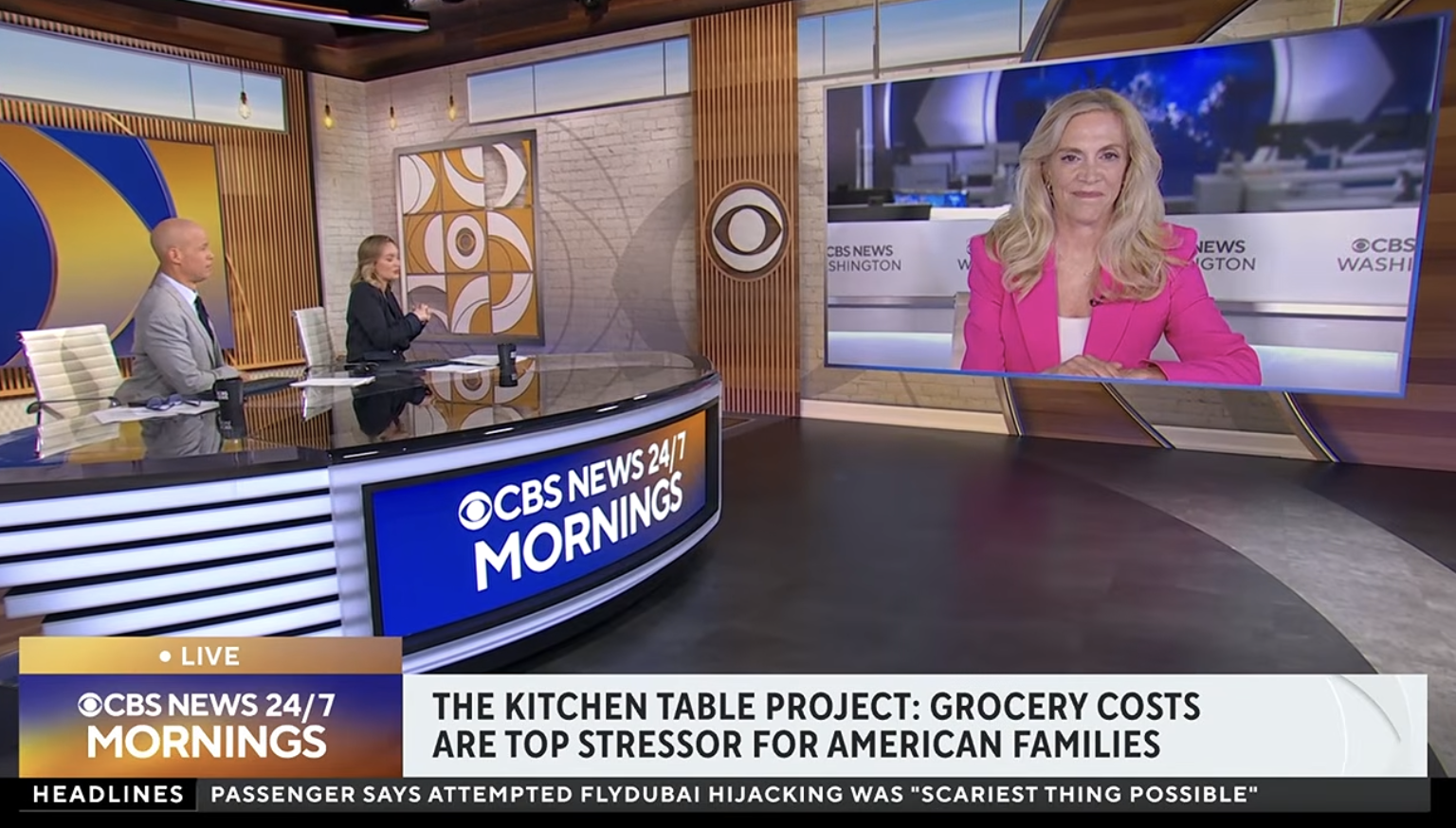
CBS NEWS: Grocery costs are squeezing Americans amid Iran war and inflation, poll finds
PRESS RELEASE: Kitchen Table Project & Lael Brainard Release New Report and Polling
What Type of Health Care Plan Would You Craft If You Listened to Americans ...
An out-of-pocket prescription
US voters say grocery prices are their top financial stress, and want government act
Grocery prices top financial stress for Americans, survey says
Lael Brainard & Rohit Chopra: We Crunched the Data: There’s a Grocery Price Emergency in America.
Why Americans Hate the Good Economy
PRESS RELEASES
-
FOR IMMEDIATE RELEASE
New National Poll Finds Overwhelming Bipartisan Support for Monthly Cap on Out-of-Pocket Healthcare Costs
“Healthcare Cost Cap” proposal addresses Americans' top healthcare affordability concern while earning strong support across party lines
WASHINGTON, D.C. — July 22, 2026 — As healthcare costs continue to strain family budgets, new national polling released today by The Kitchen Table Project and Global Strategy Group finds that Americans overwhelmingly support a proposal to cap monthly out-of-pocket healthcare costs, so that a family's medical bills stop at a fixed monthly amount no matter what happens.
The survey of 800 registered voters found that 72 percent of Americans support establishing a monthly maximum on out-of-pocket healthcare costs, including 80 percent of Democrats and 68 percent of Republicans. Support remains strong even after respondents hear balanced arguments for and against the proposal, with 76 percent ultimately supporting the plan.
The polling also underscores why the proposal resonates. High deductibles and copays emerged as Americans' leading source of healthcare-related financial stress, particularly among privately insured families and middle-income households.
"After hearing around the country that high deductibles and copays are causing people to delay getting care and to incur medical debt, we are proposing a novel Healthcare Cost Cap—a monthly out-of-pocket cost cap—that could apply across employer plans, Medicare, and marketplace plans and be paid for by private sector pricing reforms without creating new fiscal burdens," said Lael Brainard, Chair of the Kitchen Table Project. "In our survey, large bipartisan majorities supported the monthly Healthcare Cost Cap, and respondents preferred a monthly cap over an equivalent annual cap by 3 to 1."
The findings reinforce the need for the Healthcare Cost Cap proposal, which would establish a monthly limit on what insured Americans pay out of pocket for hospital care, physician visits, prescription drugs, and other covered medical services. Once a family reaches the monthly maximum, insurance would cover the remaining eligible healthcare costs for that month. The proposal would apply across employer-sponsored insurance, Medicare, and Affordable Care Act marketplace coverage.
"For too long, we've tried to make healthcare more affordable by asking patients to pay more. It didn't lower costs—it shifted risk onto families," said Neale Mahoney, advisor to the Kitchen Table Project and lead author of its healthcare proposal. "This plan flips that approach. It caps what families pay out of pocket while targeting the excessive prices and overpayments that are driving healthcare costs in the first place. The result is better financial protection, stronger competition, and a plan that pays for itself."
Among the poll's key findings:
Three in four Americans support a monthly cap on out-of-pocket healthcare costs, with strong bipartisan backing.
A majority of voters prefer a monthly cap over an equivalent annual cap, saying it provides greater peace of mind and more meaningful financial protection.
The proposal's strongest appeal is the certainty it provides: protecting families from medical debt, ensuring insurance works when people need it, and giving households a predictable monthly maximum for healthcare expenses.
A $250 monthly cap generated the strongest support among respondents, although support remained substantial for a $500 monthly cap.
The Healthcare Cost Cap proposal would be financed by addressing excessive healthcare prices rather than shifting costs to patients. It includes reforms aimed at increasing competition, reducing hospital and prescription drug costs, expanding Medicare drug price negotiations for everyone, improving price transparency, cutting red tape, combating medical debt, and strengthening the healthcare workforce.
The proposal responds to a growing affordability crisis. Over the past two decades, the average deductible for workers with employer-sponsored insurance has nearly tripled to approximately $1,900. Today, roughly 100 million Americans carry medical debt, and one in three report delaying or foregoing care because of cost—even though most have health insurance.
In addition to the survey, the Kitchen Table Project has conducted listening sessions in North Carolina, Virginia, Pennsylvania, Michigan, Iowa and Arizona and asked people what costs are putting the biggest strain on their families right now.
About the Poll
Global Strategy Group conducted a national survey of 800 registered voters on July 15, 2026, on behalf of The Kitchen Table Project. The survey has a margin of error of ±3.5 percentage points and was designed to accurately reflect the geographic, political, and demographic composition of the U.S. registered voter population.
About The Kitchen Table Project
The Kitchen Table Project develops practical, research-driven policy ideas that address the everyday economic concerns facing American families. Through polling, listening sessions, and policy development, the organization focuses on solutions that provide meaningful relief, resonate with the public, minimize fiscal burden, and address the underlying drivers of rising costs.